
The Caminhos da Ibiapaba has been opened in Brazil.
Coordinated by the Ministry of the Environment and Climate Change (MMA) and the Chico Mendes Institute for Biodiversity Conservation (ICMBio), the 180‑km trail is part of the National Long‑Distance Trail and Connectivity Network and is the first long‑distance route to cross the Caatinga.
The new trail connects Piauí and Ceará, integrating three biomes (Caatinga, Atlantic Forest and Cerrado) and three federal protected areas (PAs): Sete Cidades National Park, Ubajara National Park and the Serra da Ibiapaba Environmental Protection Area.
The route offers viewpoints, waterfalls, archaeological sites and traditional communities as a new alternative for community‑based environmental tourism and for generating employment and income in the region.
According to the MMA’s director of Protected Areas, Pedro Menezes, the route is 100% signposted and already consolidates itself as a structured tourism product, with accredited guides and a partner accommodation network registered.
“It is a complete crossing, with natural and cultural elements and diverse possibilities of use, reviving the culture of the cowboys and traveling merchants that helped construct the history of the Northeast,” Menezes said.
Implemented along a historic route still used by livestock‑drivers in regional trade, the trail links conservation, memory and development.
“With this initiative, ICMBio advances in its mission of conserving nature with people, offering visitors the opportunity to get to know and fall in love with the landscapes, geological monuments, preserved fauna and flora of the Serra da Ibiapaba, as well as with the culture and hospitality of the local communities, which offer various support points along the crossing,” said the Institute’s coordinator‑general of Public Use and Environmental Services, Carla Guaitanele.
Coordinator‑general of Tourism Products and Experiences at the Ministry of Tourism, Fabiana Oliveira, said: “Long‑distance trails such as Caminhos da Ibiapaba strengthen local productive chains, stimulate community‑based tourism, value natural and cultural heritage, and increase the visibility of destinations aligned with good conservation and sustainable‑development practices in the territory through tourism.”
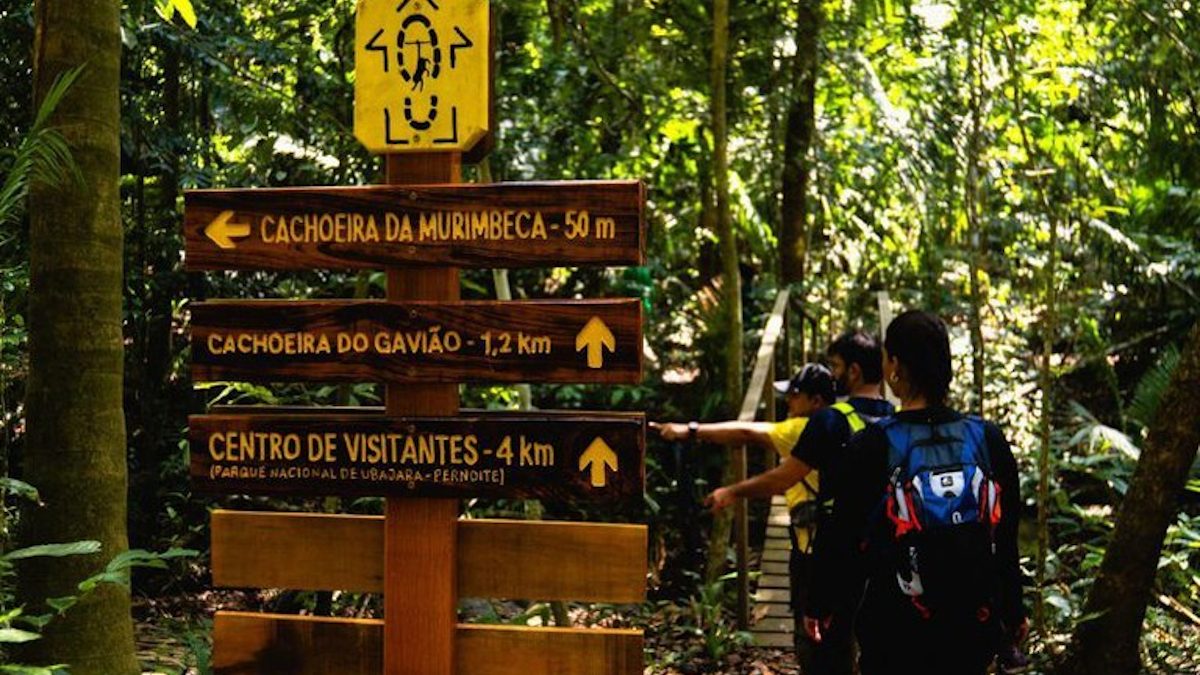
With support from the managers of the PAs, the routes were reviewed to enhance accessibility, safety and attractiveness. The signage follows the guidelines of the National Trail Network and stretches were redesigned to prioritise shaded areas and natural viewpoints. Nearly 40 km were reconfigured inside Ubajara National Park, replacing stretches previously laid out along roads and urbanised areas.
The trail can be covered on foot or by bicycle, in full or in sections, individually, in groups or with trained local guides. The route offers views of the Serra da Ibiapaba from Ubajara National Park and of the geological formations with rock‑paintings in Sete Cidades National Park.
In São João da Fronteira, local mobilisation originated the Trail of São João da Fronteira, a complementary route among carnauba palms and sites with rock‑paintings, extending the project’s territorial reach.
The 13 sections cross municipalities such as Tianguá, Ubajara and Ibiapina in Ceará, and São João da Fronteira, Brasileira and Piracuruca in Piauí, passing through communities that preserve 17th‑century houses, dams and historic reservoirs.