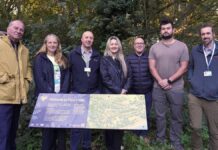

The National Parks Board (NParks) in Singapore has officially opened Asia’s first Nature Immersion Trail at Saraca Stream in Singapore Botanic Gardens.
Certified by the Association of Nature and Forest Therapy (ANFT) in the US, the trail is designed to provide visitors with a structured, self-guided experience that will allow them to foster deeper, more mindful engagement with nature and the surrounding environment at their own pace and convenience, and through this, improve their physical and mental well-being.
Studies have shown immersion in therapeutic landscapes, participating in therapeutic horticulture programmes or going for nature walks can contribute to enhanced physical and mental wellness. In June 2025, NParks launched the Parks for Health framework to leverage existing parks and therapeutic landscapes to boost community wellness, and enhance access to greenery and the restorative benefits of nature.
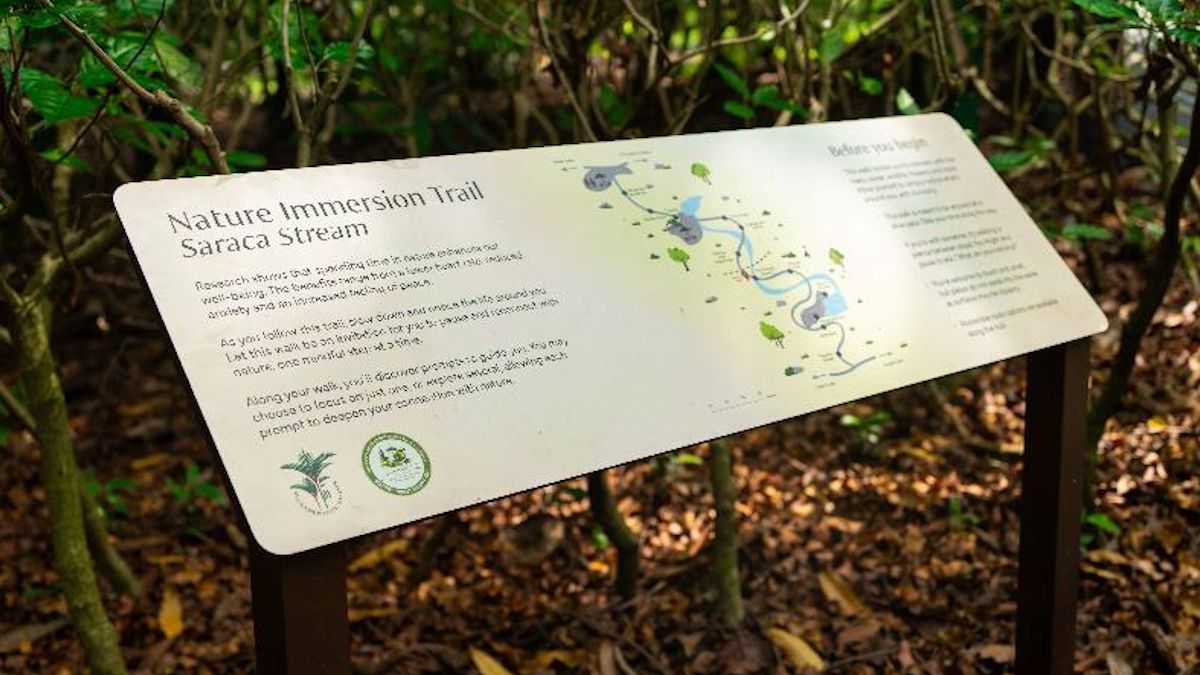
The Nature Immersion Trail at Saraca Stream represents a new typology of therapeutic landscapes under the framework, where interpretive signage guide visitors to engage their senses by noticing the surrounding greenery and landscape while facilitating a gradual immersion into the natural environment at their own pace and convenience.
Many trails in Singapore have been developed for various recreational purposes. A nature immersion trail, on the other hand, is a route that winds through greenery and is specially curated to encourage visitors to engage with natural light, sounds, colours, and other stimuli to foster a gradual immersion into nature through a gentle, multi-sensory journey. The certification of the nature immersion trail at Saraca Stream recognises a route that fulfils these qualities.
The 150-metre Nature Immersion Trail at Saraca Stream is accessible to people of different physical abilities, including wheelchair users, thus enabling more people to participate in mindful engagement with nature and enjoy its restorative benefits at their own convenience. The signage along the route prompt visitors to experience the trail by taking deep breaths, noticing natural light filtering through the tree canopy, observing colours, forms and textures of the surrounding greenery, as well as taking time to slow down and reflect on what they are observing around them for a fuller, immersive nature experience.
There are now 28 ANFT-certified trails worldwide. To achieve ANFT certification, the trail was assessed using criteria such as user safety – including its suitability for those with disabilities – the presence of biodiversity, the availability of natural features and the overall management of the trail. NParks will conduct post-walk surveys to gather feedback to refine the nature immersion experience, and inform future trail design and development.
Recent studies have indicated a decline in mental health outcomes among Singapore residents. In the 2024 National Population Health Survey, the prevalence of poor mental health among Singapore residents, aged 18 to 74 years old, increased from 12.5% in 2017 to 15.4% in 2024.
Against this backdrop, there is growing evidence that regular exposure to nature is associated with reduced stress, improved mood, enhanced cognitive functioning and enhanced quality of life. These trends suggest a need for nature-based design interventions that intentionally foster meaningful engagement with nature to support population-level mental wellness. Nature immersion walks are one such intervention, designed to cultivate mindful, multi-sensory interactions with natural environments and deepen the sense of connection to nature. These walks may help transform occasional visits into sustained habits that support healthier behaviours and lasting improvements in mood and well-being.
Emerging international evidence suggests that there are health benefits from slow, mindful nature immersion. To further investigate the health benefits of mindful nature immersion locally, researchers from the Yong Loo Lin School of Medicine, National University of Singapore (NUS Medicine), Nanyang Technological University, Temasek Life Sciences Laboratory (TLL), A*STAR and NParks have embarked on a research study.
Led by John Wong from NUS Medicine, the study aims to assess and evaluate the psychological and physiological outcomes of participants following exposure to one of three different nature settings with differing levels of vegetation structure, biodiversity, and ecological complexity: a primary forest, a secondary forest and an urban park.
Environmental data collected for analysis include phytocides (plant compounds that enhance immune function and reduce stress levels), and soundscape, environmental conditions, and microbiome profiles. The eventual findings would inform how site-specific characteristics of natural environments influence the psychological and physiological outcomes of nature exposure and lead to distinct well-being outcomes.