
The modernisation of the Treppenbusch – the central access point from the town of Merbitz to the Zschonergrund – marks the successful first step in automotive electronics company JOYNEXT’s collaboration with the Merbitz-Mobschatz Fire Department and Heritage Association (Feuerwehr- und Heimatverein Merbitz-Mobschatz e.V.).
The Treppenbusch Trail, located five minutes from JOYNEXT, is now once again a safe and inviting destination for hikers.
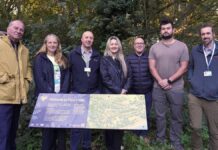
The company donated a total of 48 steps for this project. A total of 21 volunteers from Merbitz/Mobschatz, as well as three volunteers from JOYNEXT, participated in the project and have already restored 13 steps. The staircase will be fully completed this autumn.
The restoration of trails is a core component of regional environmental protection: it reduces erosion caused by rain and foot traffic, protects the soil from compaction, and prevents damage to tree roots. This protects the sensitive forest floor, minimises disturbances to flora and fauna, and ensures the long-term preservation of the Zschonergrund, keeping it accessible to everyone.
The following tasks were carried out:
Construction of a birdbath to support the local bird population
Mulching of the Eisteich to improve soil and water quality
Trail rehabilitation at Treppenbusch to stabilise the path
Installation of Podemus steps for safe ascent and descent
Path reinforcement and trimming in the Zschonergrund to manage traffic flow and protect the soil
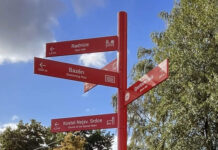
Maintenance and repair of benches and signage to improve wayfinding and infrastructure condition
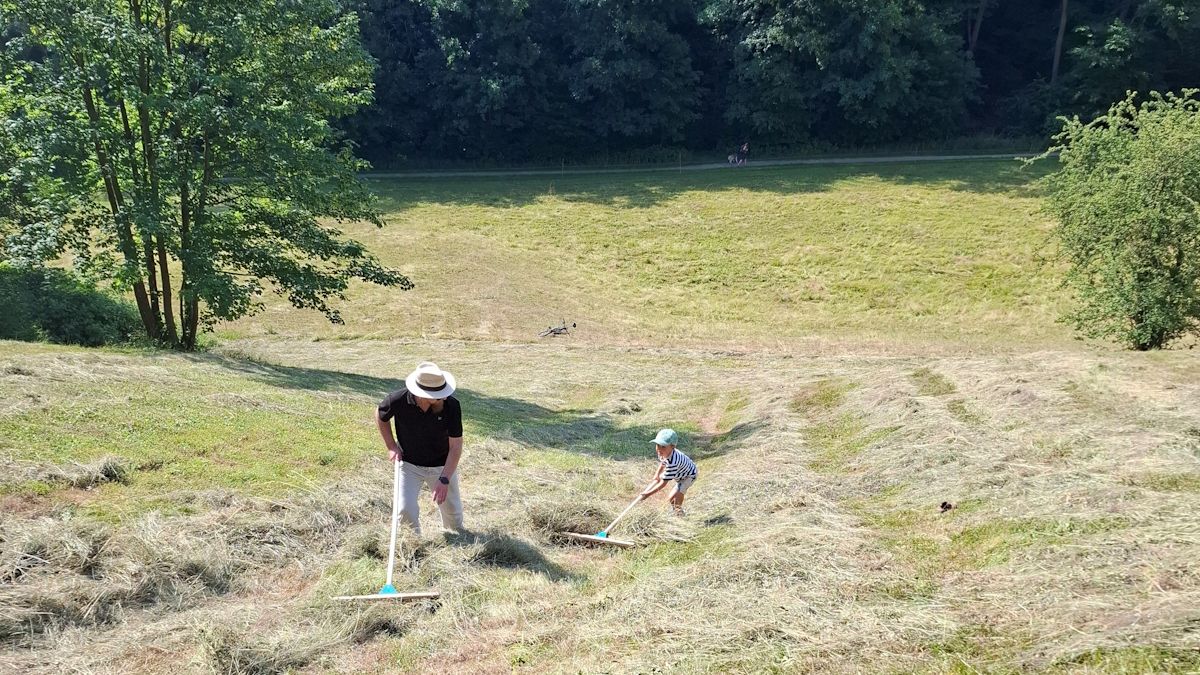
Another key priority was the protection of Böhmes Hang in the Zschonergrund -Dresden’s most flower-rich natural meadow and one of the region’s most valuable natural landmarks. Mowing wild meadows is an essential part of nature conservation. The City of Dresden mows this area once a year. To allow nature to recover afterward, the hay must be carefully raked together by hand.
Targeted mowing followed by raking reduces nutrient-rich vegetation, giving less competitive plant species the space they need to grow. This creates and preserves habitat for a wide variety of insects, especially pollinators such as wild bees and butterflies, which are entirely dependent on species-rich meadows. Without this regular maintenance, dominant plant species would quickly overgrow the area, leading to a long-term decline in biodiversity.
JOYNEXT supported the conservation effort with a donation of 23 new rakes worth approximately €500 and through volunteer efforts on site.