

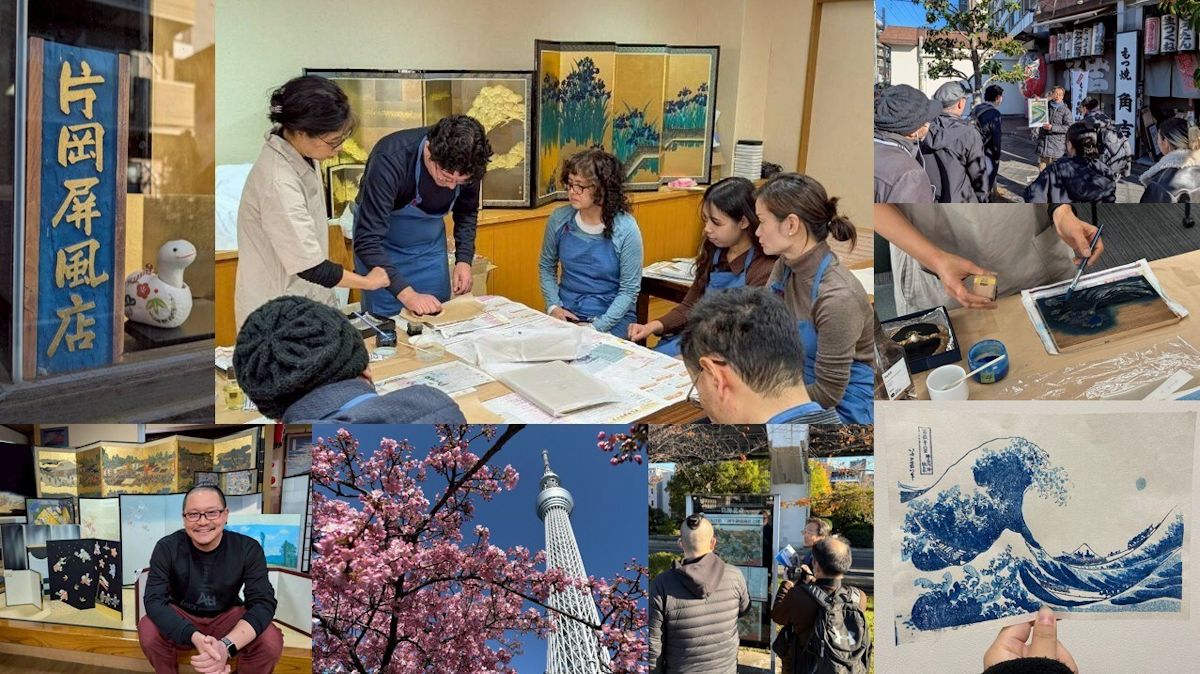
A new cultural tourism programme, Ukiyo-e Guided Walking Tour + Woodblock Printing Experience and Artisan Studio Shopping has been launched in the Mukojima area of Tokyo, offering visitors an immersive way to experience traditional Edo-period culture.
The programme combines the heritage of ukiyo-e art with contemporary craftsmanship, integrating a guided neighbourhood walk, hands-on woodblock printing, and shopping at a traditional artisan studio into one comprehensive cultural experience.
It is designed primarily for inbound international travellers as well as domestic visitors with a strong interest in Japanese culture. Located within walking distance of two of Tokyo’s most popular destinations—Asakusa and Tokyo Skytree—the programme offers a rare opportunity to enjoy a calm, historically preserved district where Edo-era atmosphere and living craftsmanship coexist. Tourism Media Service spoke with Sumida City Tourism Association about the new tourism resources originating from Tokyo’s Mukojima.
Mukojima developed along the eastern bank of the Sumida River during the Edo period and has long been known as a town of artisans. Even today, small independent workshops and family-run craft stores remain scattered throughout the neighbourhood, producing items such as woodblock prints, folding screens, traditional paper, fittings, and decorative arts.
Unlike large commercial tourist districts, Mukojima allows close interaction between visitors and craftspeople, offering direct access to production sites, tools, and techniques. This environment provides exceptional cultural value for travellers seeking authentic and meaningful experiences. The programme fully leverages Mukojima’s identity as a ‘living hub of traditional craftsmanship,’ guiding participants through a seamless flow of walking, learning, creating, and taking home their own artwork.
The experience begins near Tokyo Skytree Station on the Tobu Skytree Line with a 60-minute guided walking tour along the historic Sumida River area. Participants visit scenic and culturally significant sites such as the former Hikifune Canal, Tokyo Mizumachi, Sumida Park, the Sumida River embankment, and Ushijima Shrine—locations that frequently appeared as motifs in classic ukiyo-e prints. The walk highlights the fusion of Edo-period landscapes with the modern urban environment. After the tour, participants move to a local workshop for a hands-on traditional woodblock printing experience.
During the printing workshop, participants recreate the iconic image “The Great Wave” by world-renowned ukiyo-e master Katsushika Hokusai. This activity draws inspiration from the enduring global influence of Japonisme, the 19th-century movement that introduced Japanese art and aesthetics to Europe and continues to inspire admiration worldwide today. Guests may choose between traditional three- or six-colour printing methods, learning about pigment layering, washi paper textures, and classical printing techniques while completing their own artwork. Finished prints can be taken home as personal souvenirs, preserving the memory of the journey in tangible form. Afterward, visitors may browse and purchase handcrafted prints, washi products, and related artisanal goods at the adjoining studio shop, creating a fully integrated “Create, Learn, and Take Home” cultural experience.
The meeting point and main venue for the programme is Kataoka Byobu Shop, established in 1946 and recognised as the only specialty folding screen (byōbu) store in Tokyo. The shop manages the entire process from production to retail, preserving rare traditional techniques. Inside the Kataoka Byobu Gallery, visitors can view works including large gold folding screens, lavish gold-leaf decorated screens, modern art collaborations, and memorial screens created to commemorate special life events. The gallery showcases both classical elegance and contemporary innovation, allowing guests to witness the evolving nature of Japanese craftsmanship first hand.
The programme was developed to address challenges faced by traditional artisans, including declining demand and limited income opportunities. By linking tourism with cultural participation, it aims to support artisans’ livelihoods while preserving and passing down traditional techniques. Through small-group experiences, the initiative seeks to deepen cultural understanding while contributing to regional economic revitalisation, positioning itself as a new model for sustainable cultural tourism in Tokyo.